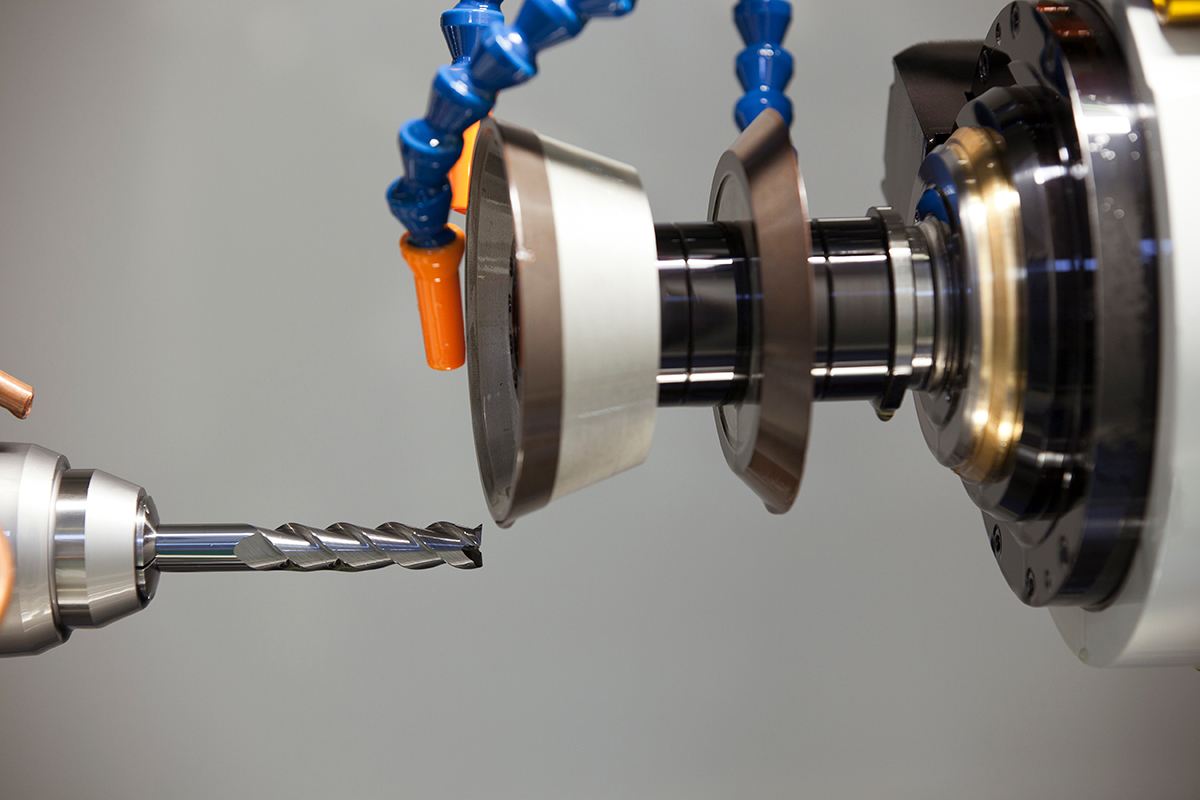
Can Tungsten Carbide End Mills Be Reground? A Guide from an End Mill Factory
As a professional end mill factory, one of the questions we hear most often is:
"Can tungsten carbide end mills be reground and reused?"
The answer is yes.
When tungsten carbide end mills become dull or experience normal cutting wear, they can often be professionally reground using precision CNC tool grinding equipment. Regrinding restores the cutting edges, allowing the tool to recover much—or even most—of its original cutting performance. This helps manufacturers reduce tooling costs, extend tool life, and maximize return on investment.
However, not every worn end mill is a good candidate for regrinding. Whether regrinding is worthwhile depends on the tool's wear condition, machining history, and the quality of the grinding process.
When Should Tungsten Carbide End Mills Be Reground?
Professional inspection is recommended before deciding whether to regrind tungsten carbide end mills.
Generally, regrinding is recommended when:
- Minor cutting-edge wear or slight edge chipping is present.
- The outside diameter has experienced only limited wear.
- The tool body remains free from cracks or structural damage.
- Sufficient flute length remains for proper regrinding.
Regrinding is generally not recommended if the tool has:
- Severe edge breakage
- Broken tool shank or body
- Damaged or distorted flutes
- Excessive wear that would significantly reduce cutting performance
In these cases, replacing the tool is usually more economical than attempting repairs.
Five Factors That Determine Regrinding Accuracy
The quality of regrinding directly affects the performance of tungsten carbide end mills. An experienced end mill factory will carefully control the following factors.
1. CNC Tool Grinder Precision
Modern five-axis CNC tool grinders provide significantly higher accuracy and repeatability than manual grinding machines, ensuring consistent geometry and cutting performance.
2. Tool Clamping Stability
The end mill must remain perfectly centered and securely clamped throughout the grinding process. Even slight vibration or runout can negatively affect dimensional accuracy.
3. Grinding Wheel Quality
Grinding wheels should be properly dressed and balanced on a regular basis. A sharp, stable grinding wheel produces smoother cutting edges and improves dimensional consistency.
4. Coolant Performance
A continuous supply of coolant removes grinding debris while preventing excessive heat buildup, helping preserve the carbide substrate and reducing thermal damage.
5. Technician Experience
An experienced operator carefully adjusts feed rates, grinding depth, and wheel contact angles to avoid excessive material removal, dimensional errors, or damage to the cutting edges.
Should Tungsten Carbide End Mills Be Recoated After Regrinding?
Yes—in most industrial machining applications, recoating is highly recommended.
The Original Coating Is Removed During Grinding
Regrinding inevitably removes part or all of the original coating, especially around the cutting edges.
Without a protective coating, tungsten carbide end mills wear much faster when machining under demanding conditions such as:
- High spindle speeds
- High cutting temperatures
- Dry machining
- Hardened steel
- Stainless steel
- Nickel-based superalloys
- Other difficult-to-machine materials
Recoating Restores Tool Performance
Applying a new PVD coating after regrinding helps restore—and in some cases even improve—the tool's cutting performance.
Benefits include:
- Improved wear resistance
- Lower cutting friction
- Better heat resistance
- Longer tool life
- More stable machining performance
- Lower overall tooling cost
For manufacturers seeking the maximum value from their cutting tools, regrinding followed by recoating is often the most cost-effective solution.